
Last updated November 20, 2026
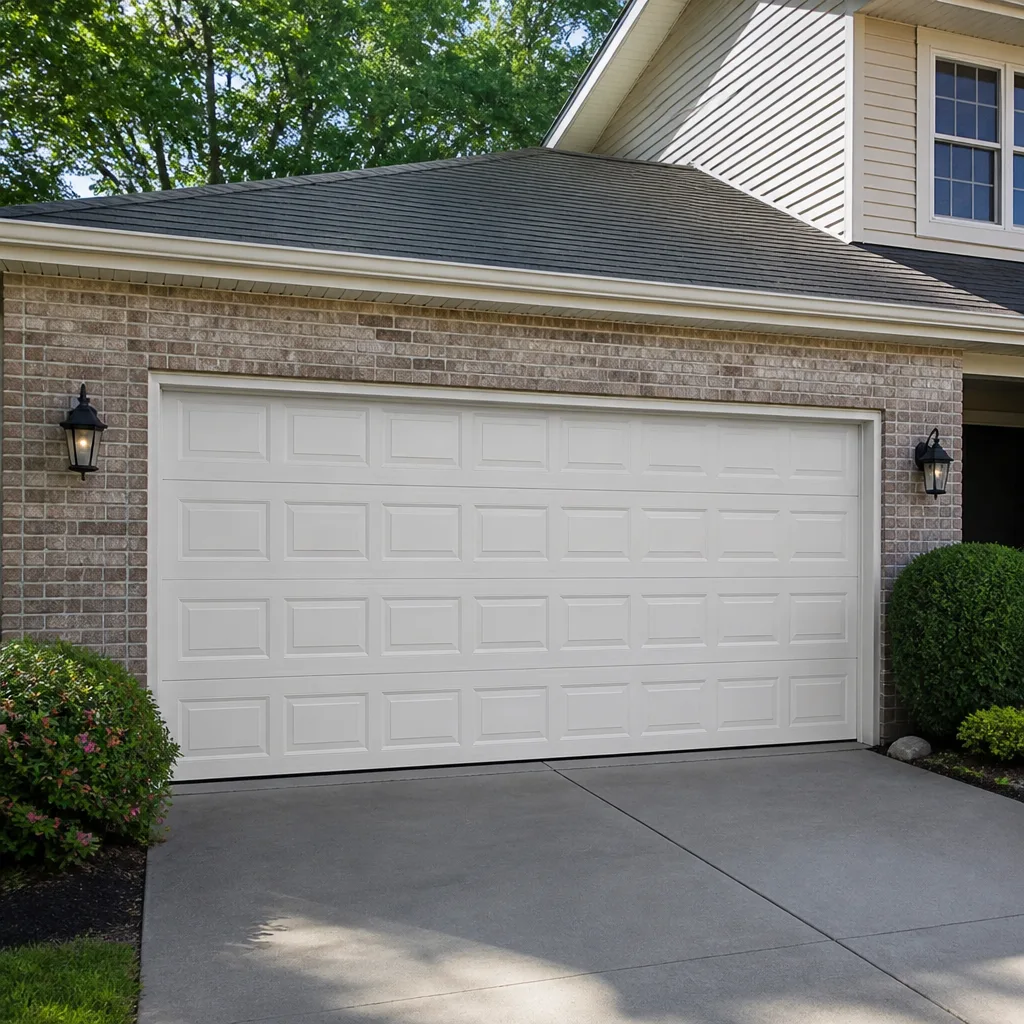 Raised-panel steel
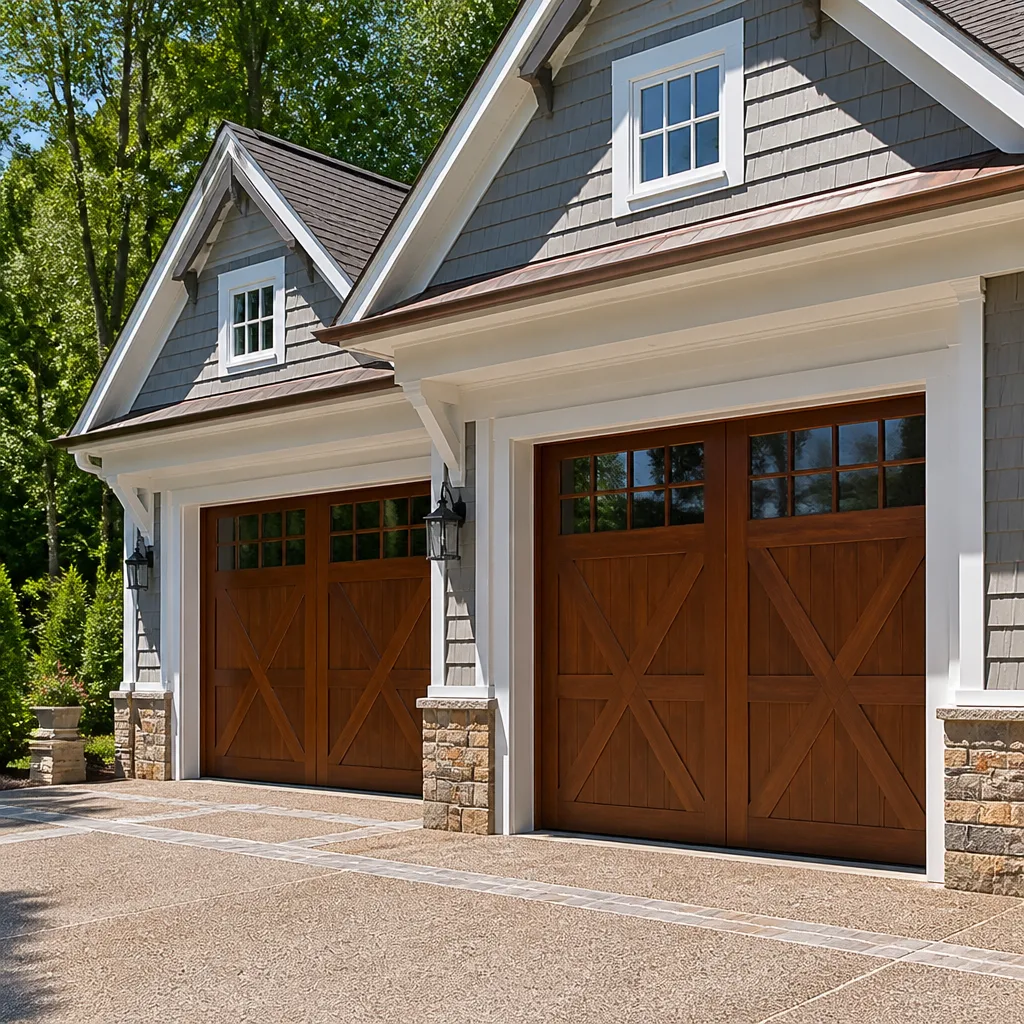 Carriage house
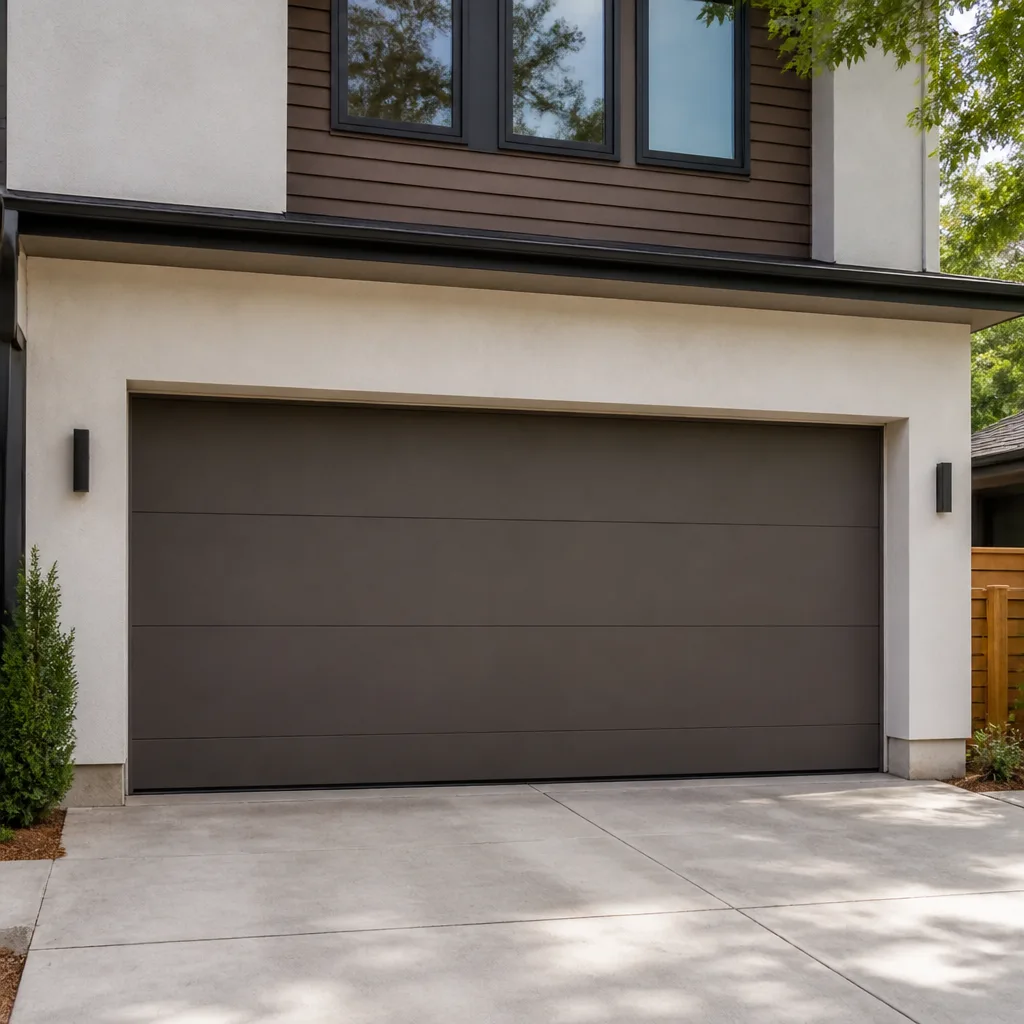 Modern flush
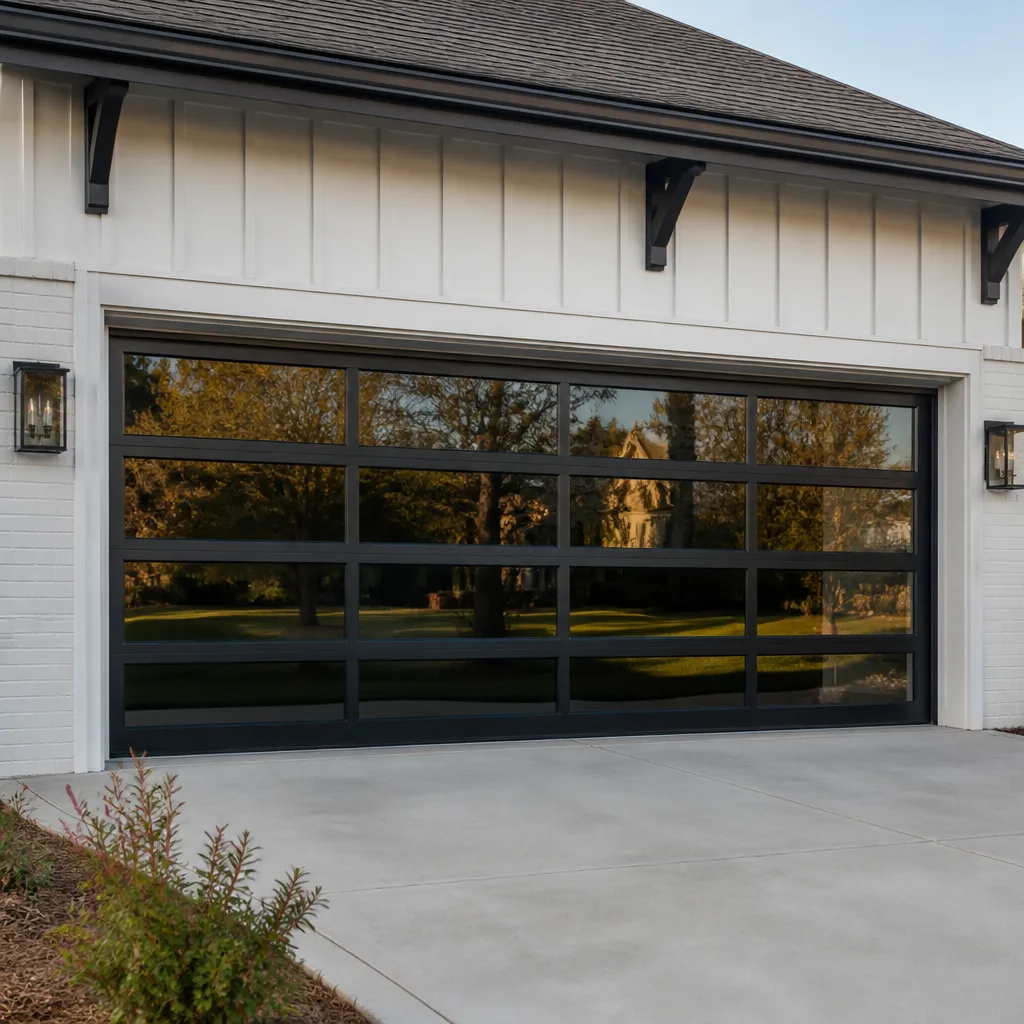 Full-view glass
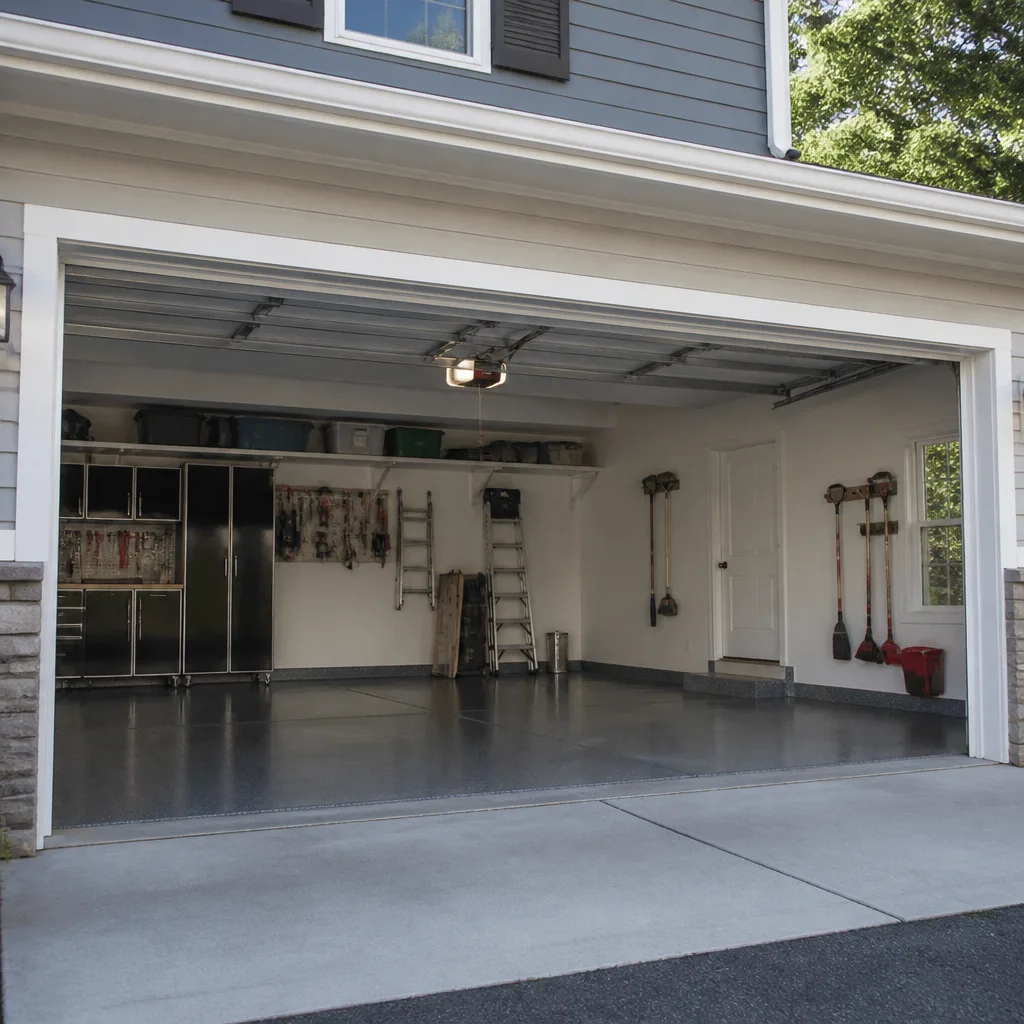 LiftMaster openers
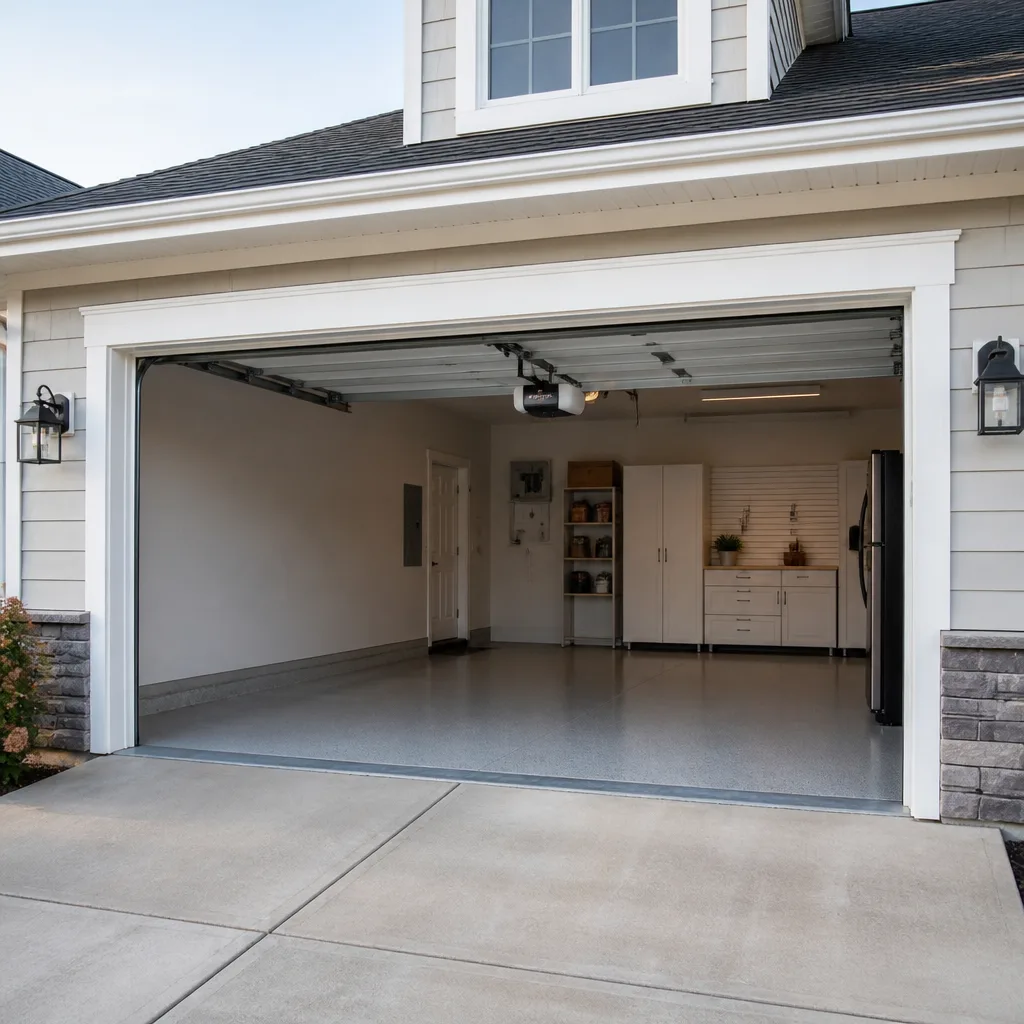 Chamberlain openers
Full 25-point door and opener safety check with every visit - springs, cables, rollers, tracks, and your LiftMaster or Chamberlain opener included
You get a price before we start. It does not change when the pro arrives.
Get your free estimateThe Complete Guide to Garage Doors in Broad Ripple
Most garage door guides treat every house the same. But a 1924 craftsman bungalow off Guilford Avenue and a recent infill build along Broad Ripple Avenue have almost nothing in common structurally, and buying the wrong door for your opening can mean costly modifications before installation even starts. The right choice for your garage in Broad Ripple depends on when your house was built, how the garage was framed, and how much headroom you actually have. This guide walks through the housing eras, the door styles that fit them, opener sizing, hardware decisions, and the permit questions that come up when you replace or install a door in Marion County.
Quick Answer
The right garage door for a Broad Ripple home depends mostly on the era of the house: pre-war bungalows usually suit carriage-house style doors and need custom sizing for undersized openings, mid-century ranches work well with flush steel panels and often have shallow headroom that limits opener choice, and newer infill construction typically accepts standard 7-foot or 8-foot doors with high-lift or wall-mount openers. Before any door is ordered, someone has to measure the rough opening, check headroom, and confirm the existing tracks and springs can handle the new weight. Get the measure right and the install is routine. Get it wrong and the door may not fit at all.
Styles & brands we work with
- Raised-panel steel
- Carriage house
- Modern flush
- Full-view glass
- LiftMaster openers
- Chamberlain openers
Table of Contents
- How Broad Ripple’s Housing Stock Shapes Garage Door Choices
- Door Styles That Fit the Neighborhood
- Choosing an Opener for Your Garage’s Clearance and Power
- Tracks and Hardware: Salvage or Replace?
- Permits and Inspections in Marion County
- Repair vs. Replace: How to Decide
- What Affects the Cost of a Door in Broad Ripple
- Common Mistakes to Avoid
How Broad Ripple’s Housing Stock Shapes Garage Door Choices
Broad Ripple is one of the few Indianapolis neighborhoods where three distinct building eras sit within a few blocks of each other. A pre-war bungalow on a tree-lined street, a 1950s ranch a block over, and a newer infill home on a narrow lot might all be within walking distance, and each one presents a different garage door problem. Understanding which era you’re dealing with is the first step toward the right decision.
Pre-war bungalows, roughly 1910 to 1940, often have detached garages that were built for a single car with a very tight footprint. Their door openings are sometimes narrower and shorter than modern standard sizes, and the walls and headers may not be perfectly square after a century of settling. This means a stock door from a big box store almost never drops in clean. Carriage-house style doors, which mimic the swing-out look of early garage doors, fit the architecture better than a modern ribbed steel panel, and the extra visual weight on the face is a bonus.
Mid-century ranches, roughly 1945 to 1975, usually have attached garages with a shallower ceiling height. Headroom in these garages is often just enough for a standard door but leaves little room for a bulky opener and rail. That matters when the time comes to choose an opener, because the standard ceiling-mounted unit may not fit above the door’s high arc. Wall-mount or jackshaft openers solve this problem, and they’re a frequent upgrade in Broad Ripple ranches.
Newer infill construction, from the 1990s forward, tends to have standard 7-foot or even 8-foot doors in an attached two-car garage with plenty of headroom. The door choice there is mostly aesthetic, and the installation is usually straightforward.
- Pre-war bungalow garages: narrow, shallow, often detached, out-of-square openings
- Mid-century ranch garages: attached, shallow ceiling, tight headroom, standard width
- Newer infill garages: standard 7-foot or 8-foot openings, deep headroom, flexible door options
Door Styles That Fit the Neighborhood
Carriage-house and flush-panel steel doors dominate Broad Ripple visually, and that’s no accident. The neighborhood’s dominant architecture pulls toward one or the other, and matching that look tends to help at resale on the near-north side, where buyers are tuned into the aesthetic of the street. A ribbed commercial-style panel door on a craftsman bungalow looks out of place, and so does an ornate carriage-house door on a clean-lined mid-century ranch.
Carriage-house doors are built to mimic the swing-out doors of the early 20th century, with decorative hinges, handles, and often windows. Clopay and Amarr both offer carriage-house profiles in steel and composite materials that hold up well in Indiana weather, and Wayne Dalton makes similar styles in a range of price points. If your bungalow has an original two-car detached garage and you want the face to look period-correct without the maintenance of real wood, steel carriage-house is the practical choice.
Flush-panel steel doors have a smooth or subtly textured face with no raised or recessed panels. They suit mid-century ranches and modern infill construction particularly well, and they’re often less expensive than carriage-house styles. Craftsman-branded openers pair naturally with these doors, though the brand of door and the brand of opener don’t have to match.
A third option, raised-panel steel, sits between the two. It’s the most common door style on suburban ranches and works fine on Broad Ripple homes from the 1950s forward. If your house is a mid-century ranch and you want a bit more visual interest than flush panel without the period detail of a carriage-house, this is a reasonable middle ground.
One thing to keep in mind: doors with windows and heavy trim weigh more, and the springs and opener have to be sized for the extra weight. If you’re upgrading from a lightweight flush door to a heavy carriage-house with windows, your existing springs will not carry the new door safely.
Choosing an Opener for Your Garage’s Clearance and Power
The opener question in Broad Ripple is usually a clearance question, not a power question. Most residential openers made in the last two decades have plenty of lifting capacity for a standard single- or double-car door. The trouble is fitting the opener into the shallow headroom of a mid-century ranch or the tight ceiling space of a converted pre-war garage.
Standard ceiling-mount openers attach to the ceiling and run a rail back to the door. They need roughly 2 inches of clearance above the highest point of the door’s travel and a rail length that matches the depth of the garage. In a Broad Ripple ranch with a shallow ceiling, that clearance may not exist, and the installer either has to lower the door’s high arc (which requires reworking the tracks) or switch to a wall-mount opener.
Wall-mount or jackshaft openers sit beside the torsion bar at the front of the garage and turn the bar directly. They need no ceiling rail and no overhead clearance. For a Broad Ripple ranch garage with limited headroom, a wall-mount is often the cleanest solution, though it requires the door to be torsion-sprung (not extension-sprung) and adds a bit to the install cost.
Older detached garages in Broad Ripple sometimes have extension springs on the sides of the door rather than a torsion bar overhead. Those aren’t compatible with wall-mount openers without a spring conversion, and the conversion is worth doing anyway if the springs are original to the door. Extension springs stored along the sides of the door are also the more dangerous of the two spring types, because when they fail they can whip outward. Never try to handle them yourself.
If your opener just stopped responding and the door itself is fine, the fix is usually an opener repair rather than a full replacement. We can diagnose LiftMaster, Chamberlain, Genie, and Craftsman units and, in many cases, resolve the problem without replacing the unit. If you’ve decided to replace the opener, our garage door opener repair team can walk you through clearance and compatibility for your specific garage.
Tracks and Hardware: Salvage or Replace?
When you buy a new door, the first question is whether the existing tracks and hardware will work with it. In a Broad Ripple pre-war garage, the answer is sometimes no. In a mid-century ranch, it’s often yes with minor adjustments. In newer infill construction, it’s almost always yes. There are a few specific things a technician checks before ordering a new door.
- Track condition. Look for dents, kinks, and rust, especially where the track curves into the horizontal section. Dented tracks cause the rollers to bind and the door to jump. Curved sections that are damaged usually need to be replaced rather than straightened.
- Track alignment. The two vertical tracks should be plumb to each other and the horizontal tracks should be level. In older Broad Ripple garages where the walls have settled, the tracks can be out of alignment even when they look fine, and a new heavier door will make the misalignment obvious.
- Roller wear. Steel rollers last about as long as the door’s spring cycle. Nylon rollers tend to be quieter but wear faster. If the rollers are original to a door that’s already being replaced, plan to replace them.
- Hinge condition. Hinges are the pivot points for each panel. Worn hinges make the door noisy and can cause the panels to bind. For a door being replaced, new hinges usually come with the new door; for a door being repaired, hinge replacement is inexpensive.
- Spring setup. A new door has to have springs sized to its exact weight. Never reuse the existing springs on a new door. Springs are the most dangerous part of any garage door system and need to be matched to the door’s weight precisely.
If you’re keeping your existing door and just want to fix a specific problem, a technician can usually tell you within minutes whether the tracks are salvageable. If the track is dented, misaligned, or rusted through, replacement is the answer. If the track is straight and the rollers turn smoothly, the door is probably fine.
One point worth stressing: if you’re buying a new door and the existing tracks are even marginal, replace them at the same time. Mixing a new door with old tracks is a common source of repeat visits, and the cost of new tracks is a small fraction of the door itself.
Permits and Inspections in Marion County
This is where local knowledge matters, and it’s also where we tell every Broad Ripple homeowner to call the city rather than take our word for it. Marion County permit rules for garage doors have some nuance, and the rules can shift. The most reliable path is to call the city’s building department directly and describe exactly what you’re doing.
Replacing a garage door in kind, meaning the same size and location, is usually handled as a routine repair and typically doesn’t require a permit in most jurisdictions. But a new door that changes the opening size, adds a new electrical circuit for the opener, or involves structural work on the garage header may trigger a permit and an inspection. Attached garages have stricter rules than detached garages in many cases, because of fire separation requirements between the garage and the living space.
If you’re installing a new opener, that may require an electrical permit in some jurisdictions, particularly if the existing garage doesn’t already have a working outlet near the opener. If the wiring is already there and you’re just swapping the unit, the permit question is usually simpler, but again, ask the city.
Here’s what we tell every Broad Ripple homeowner who asks us to handle the permit side: we’ll give you a straight answer about what the work involves, and we’ll tell you exactly what to ask the building department. We won’t guess at a permit number or a fee we haven’t confirmed. If you call the city, they’ll tell you in a few minutes whether your job needs a permit. It’s a five-minute phone call that can save a lot of trouble later.
In our experience, most single-family residential door replacements in Broad Ripple go through without a permit. The jobs that do trigger the process are usually the ones that change the size of the opening, add new electrical work, or touch the structure above the garage header.
Repair vs. Replace: How to Decide
A door that’s still structurally sound usually doesn’t need to be replaced. A door with three cracked panels, rust-through along the bottom, or a broken spring after 15 years of use usually does. There’s a set of general guidelines that help make the call, and they apply to Broad Ripple homes as well as anywhere else.
- Repair the door if the panels are intact, the tracks are straight, and the problem is isolated to one component such as a spring, roller, or hinge. Spring repair is one of the most common jobs we handle and is almost always cheaper than a full replacement.
- Repair the door if the damage is cosmetic and the door still opens and closes smoothly. A few dents in a steel panel aren’t a functional problem, though replacing a single damaged section is often possible and cheaper than a full door.
- Replace the door if more than one panel has rusted through along the bottom, or if the door is bowed. Bowed doors don’t track properly and no amount of roller adjustment will fix them.
- Replace the door if the hardware is beyond reuse and the door is old enough that a partial rebuild would cost more than a new door. This comes up on pre-war bungalow garages where the tracks and hinges are original to a door that’s also original.
- Replace the door if you’re making a change of style for resale. Broad Ripple buyers notice a door that fits the house and one that doesn’t, and swapping to a carriage-house on a bungalow can be a net positive at selling time.
For the middle cases, we usually recommend getting a written estimate on both options before deciding. The written estimate is what sets the final price, and having both numbers side by side makes the choice easier. It’s also free. If your door is a candidate for repair, our garage door repair team will often be able to get you fixed the same day, assuming the part needed is on hand.
What Affects the Cost of a Door in Broad Ripple
Garage door costs vary widely because the variables are so different from house to house. Size, style, material, and the condition of the existing hardware all move the number, and in Broad Ripple the age of the garage often matters more than the door itself. Here’s what drives the number up or down.
- Door size: A single-car door is roughly half the material of a double-car door, and the cost reflects that.
- Door style: Flush-panel steel is usually the least expensive. Raised-panel is a modest step up. Carriage-house, especially with windows and decorative hardware, is usually the highest.
- Material: Steel doors dominate the residential market for good reason. Composite and wood-look doors cost more and need more maintenance.
- Opening condition: If the rough opening is out of square, the header is damaged, or the tracks are bent, that’s additional labor and parts. In a Broad Ripple pre-war garage, this adds up more often than in a newer build.
- Opener: Adding a new opener is separate from the door cost. A basic chain-drive opener and a wall-mount opener with a jackshaft and battery backup sit at different price points.
- Haul-away: Removing and disposing of the old door is a separate line on the estimate. Ask upfront whether it’s included.
Because the range is so wide, the honest answer to “how much does a new door cost in Broad Ripple” is that it depends on your specific house. The one number we can give with confidence is that the written estimate is the price. We quote before any work starts, and the number on the estimate is the number that shows up on the invoice.
Common Mistakes to Avoid
- Ordering a stock door before measuring the rough opening. Standard sizes fit standard openings. Broad Ripple pre-war garages are often not standard, and a stock door that doesn’t fit can’t be modified to fit without going back to the manufacturer. Measure first, order second.
- Reusing springs on a new door. Springs are matched to the weight of the specific door. A new heavier door with old springs is a safety problem, not a money saver. Springs, tracks, and rollers should be evaluated as a system.
- Choosing a door style that fights the house. A modern flush panel on a craftsman bungalow, or a Victorian carriage-house on a mid-century ranch, looks off. Broad Ripple has a strong visual character, and a door that fits it will be easier to sell.
- Skipping the permit question. Most door replacements don’t need one, but a change of opening size or new electrical work may. Calling the city’s building department takes a few minutes. Finding out after the fact is harder.
- Putting a ceiling-mount opener in a shallow-headroom garage. If the ceiling clearance isn’t there, the installer will have to lower the door’s high arc or switch to a wall-mount. Ask about clearance before the unit is bought.
- Ignoring track condition when replacing the door. New door on old, bent tracks is a common source of repeat visits. If the tracks are marginal, replace them with the door.
- Trying to fix springs yourself. High-tension springs and cables are the most dangerous part of the system. A wound torsion spring or a tensioned extension spring can cause serious injury if handled without the proper tools. This is a job for a trained technician, always.
When to Call a Professional
Call a professional if the door has a snapped spring, a cable has come off the drum, the door is off its tracks, the opener runs but the door doesn’t move, or the door has become very heavy to lift by hand. Those are all signs that something in the high-tension or drive system has failed, and none of them are safe to investigate without the right tools. We also handle routine work: opener diagnostics, roller and hinge replacement, panel replacement, and full installation when the door is at the end of its life. Our technicians have up to 9 years of experience, and they work on the door you already own, not just brands we’d prefer to sell. Garage Door Repair Broad Ripple offers free estimates in Broad Ripple. Call (833) 968-9838. We answer 24/7, with fast dispatch from 7am to 7pm, Sunday through Friday.
See the difference
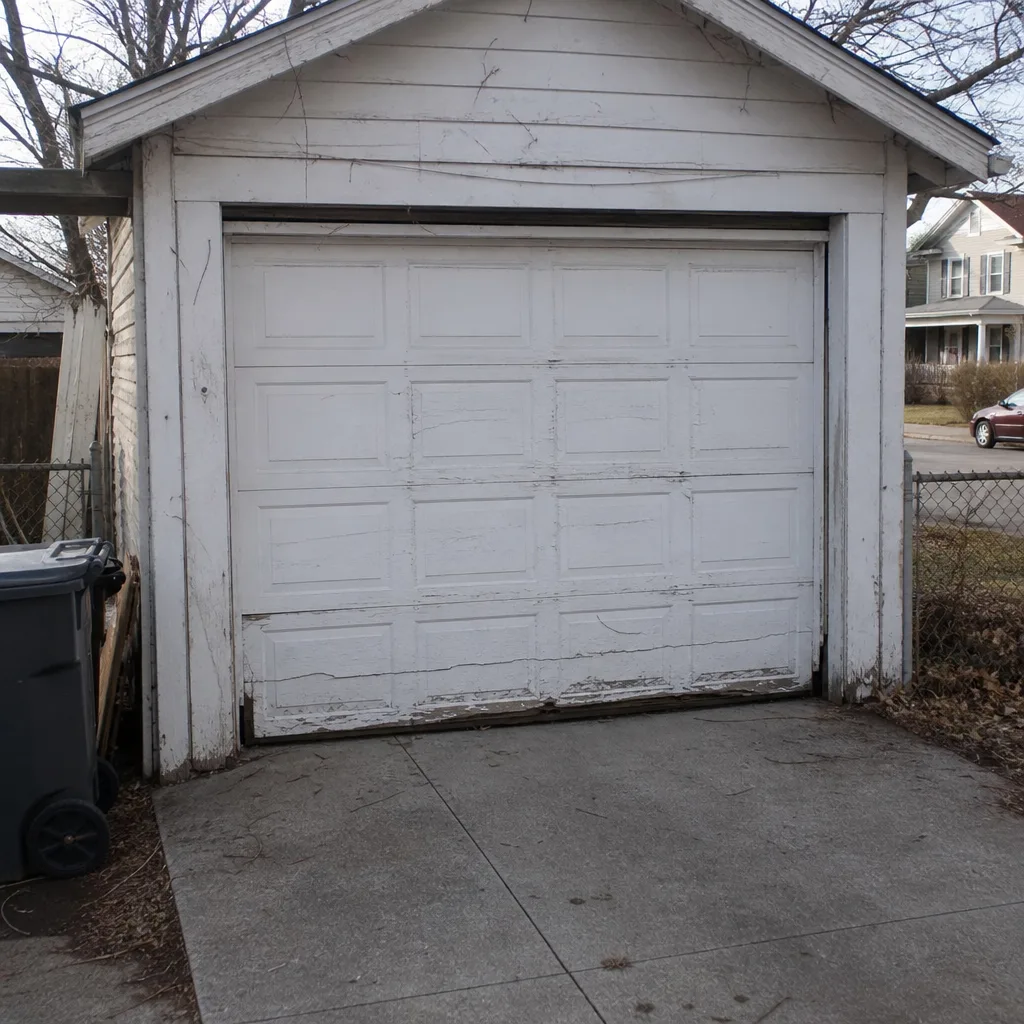 Before
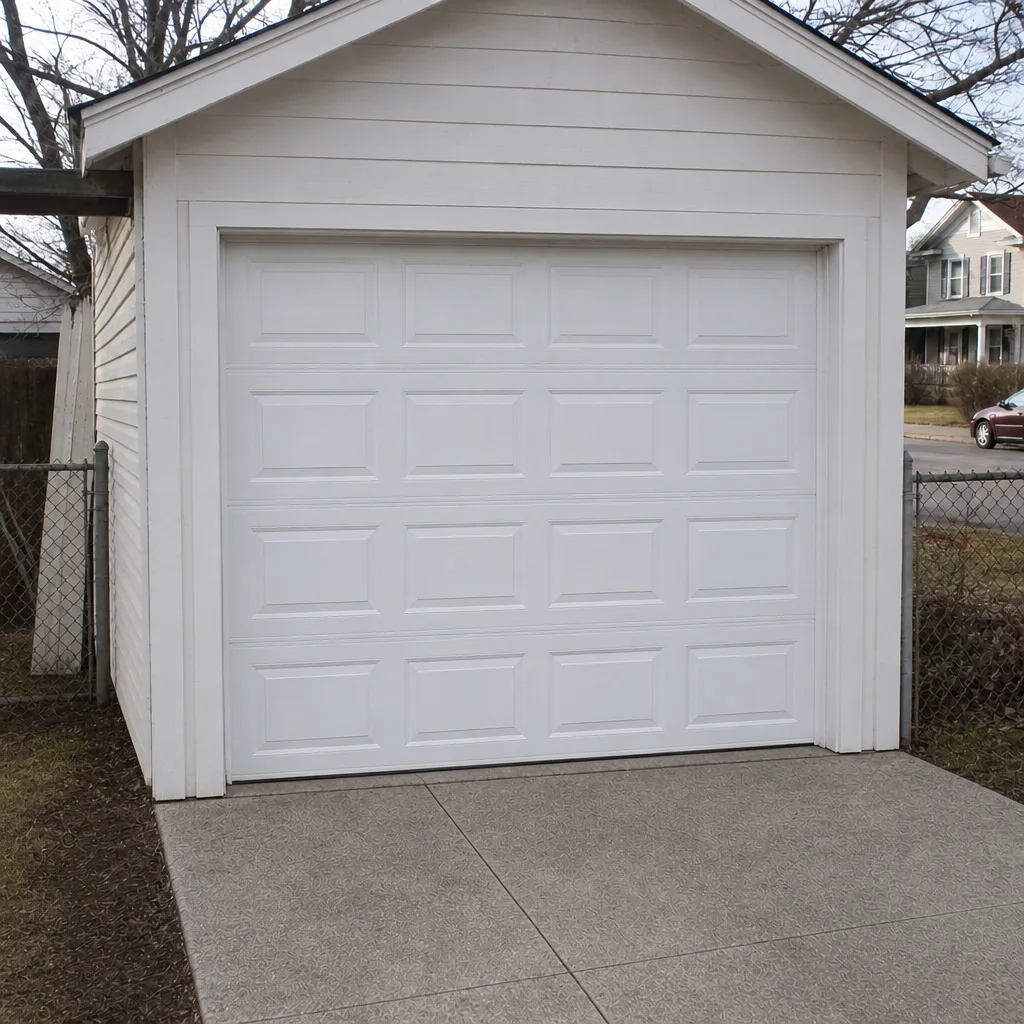 After
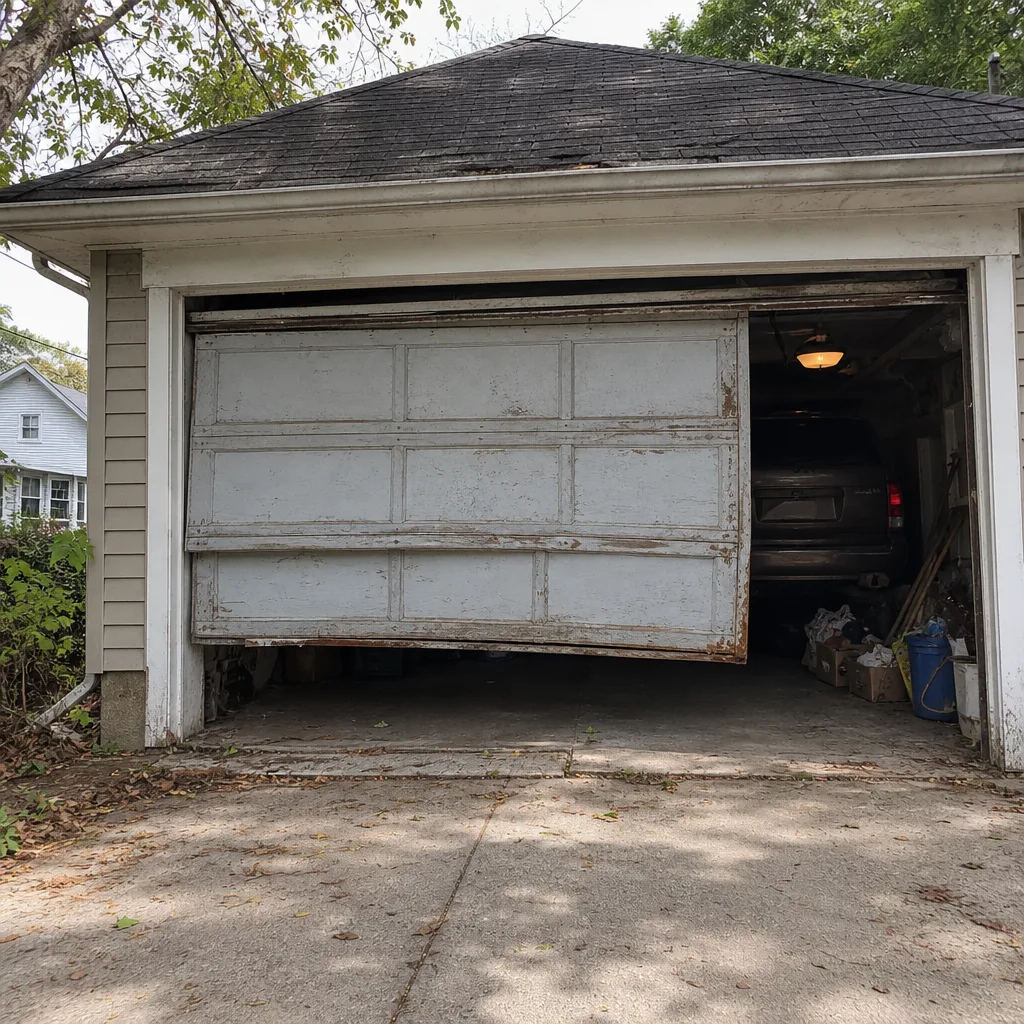 Before
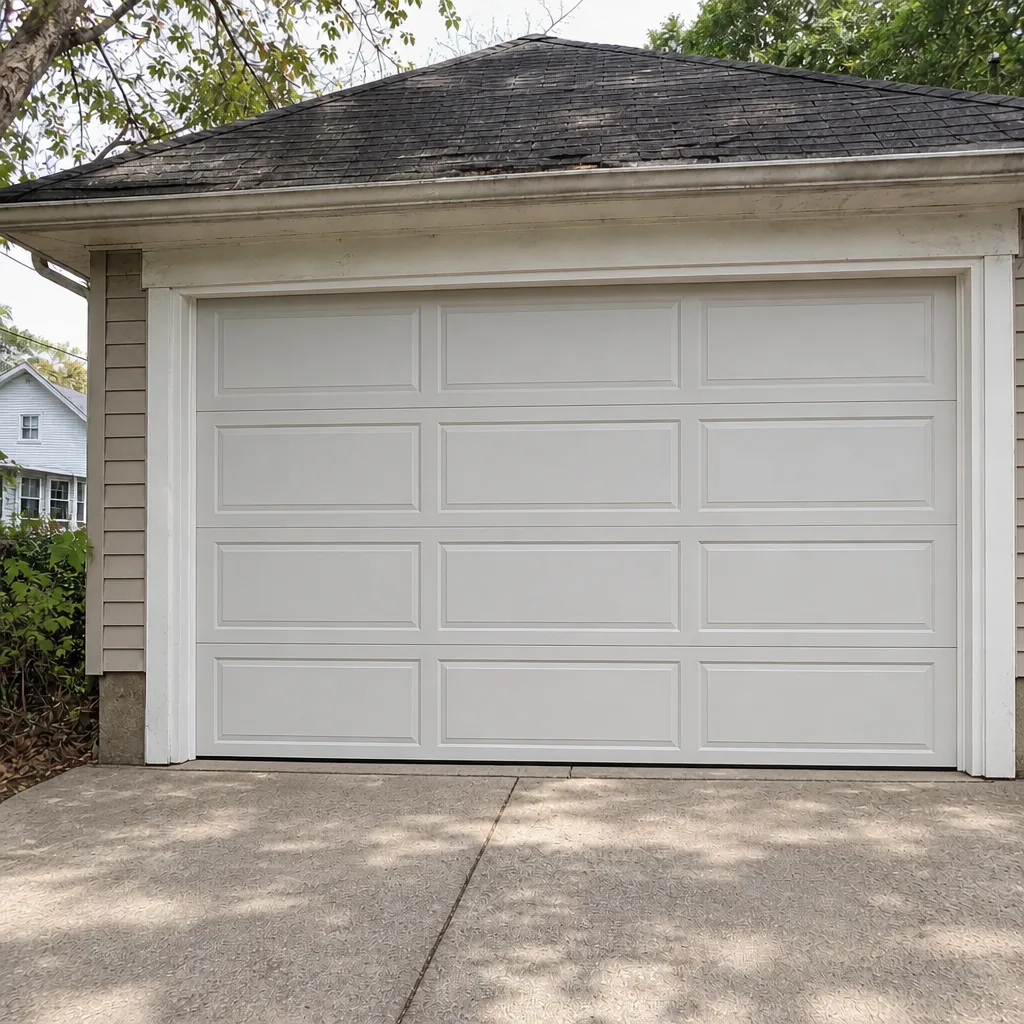 After
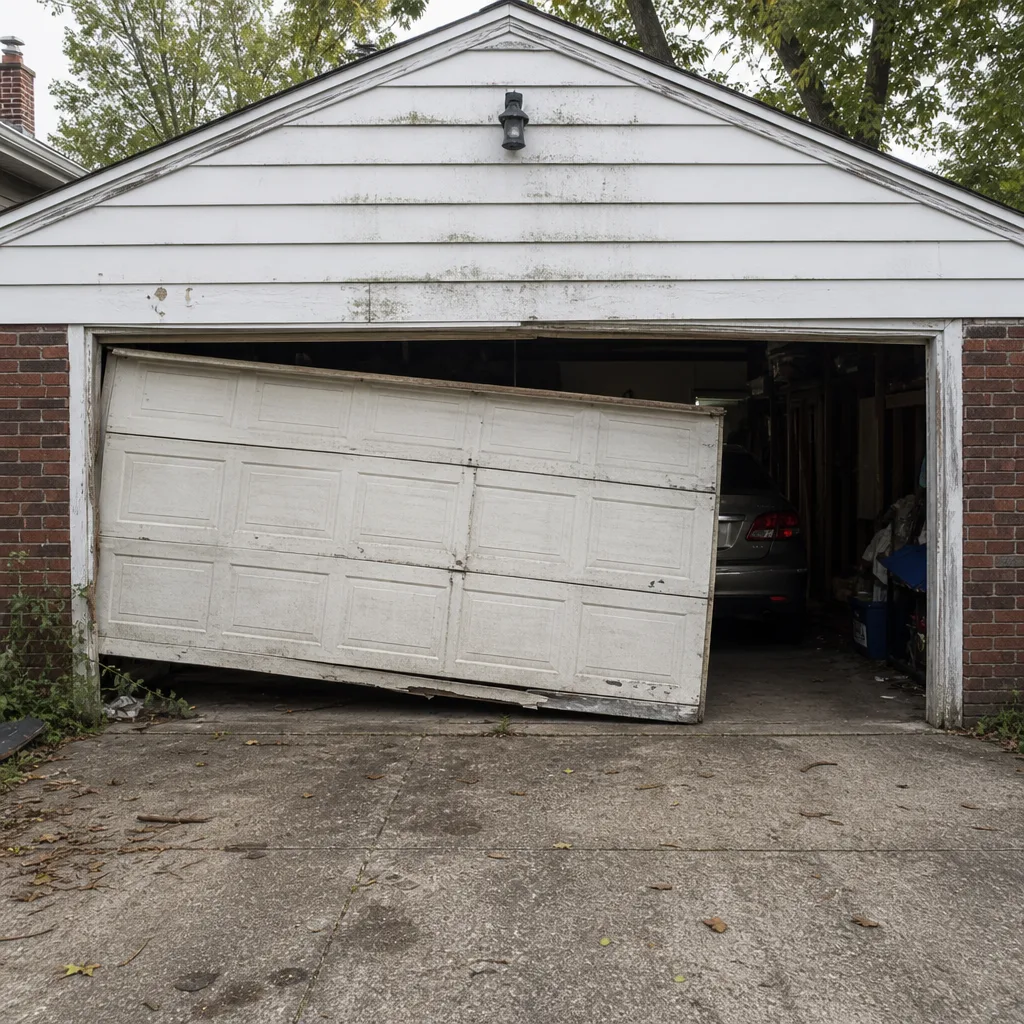 Before
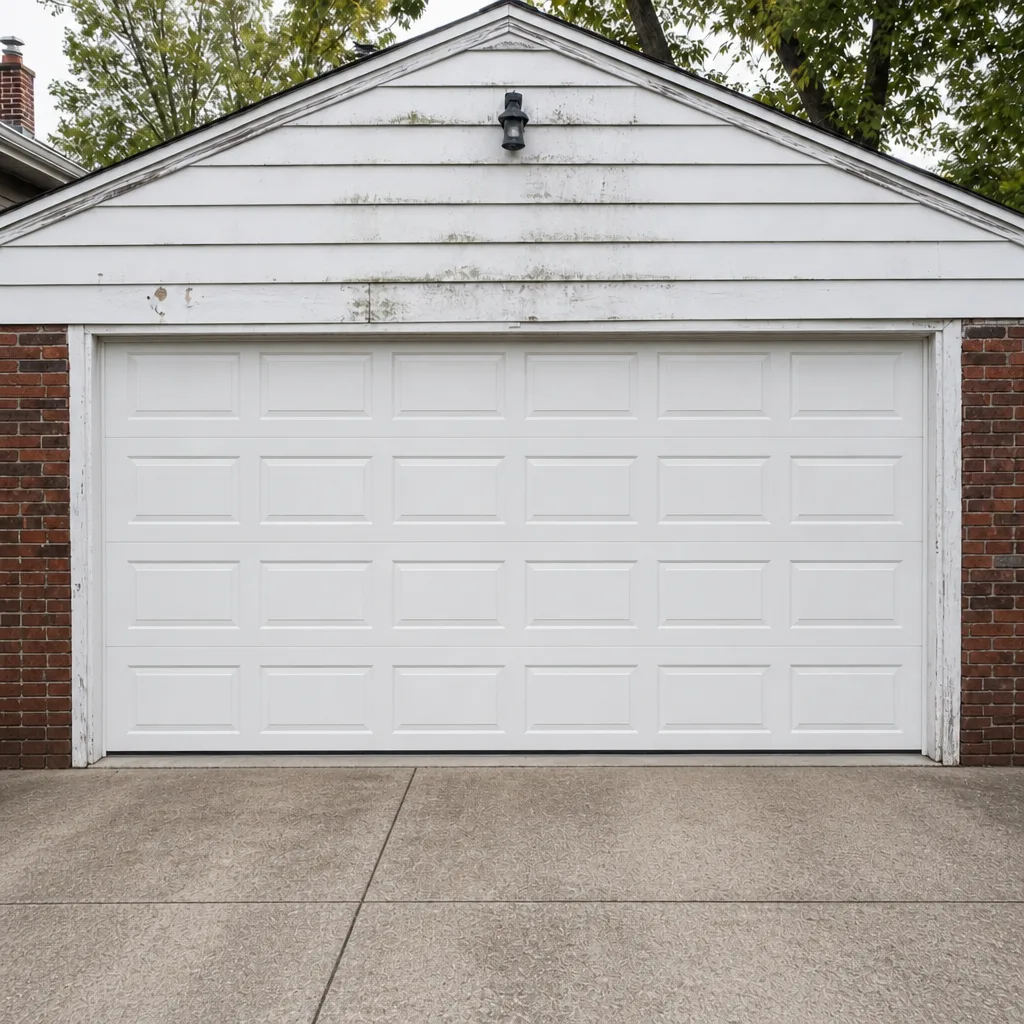 After
Frequently Asked Questions
It depends on the size, style, and condition of your opening. A standard flush-panel steel door on a mid-century ranch costs less than a carriage-house with windows on a pre-war bungalow, and if the rough opening needs adjustment, that adds labor. The written estimate is the price, and the estimate is free. Call (833) 968-9838 for an exact quote.
Most in-kind replacements of a residential garage door don’t require a permit, but jobs that change the opening size, add new electrical work, or touch the structure above the header may. Call the city’s building department and describe exactly what you’re doing. They’ll tell you in a few minutes. Call (833) 968-9838 if you’d like us to walk you through the questions to ask.
In most cases, yes. A broken torsion or extension spring is one of the most common jobs we handle, and the parts are usually on hand. Spring repair is a safety-critical job because of the high tension stored in the spring, so it’s not something to attempt yourself. Call (833) 968-9838. We answer 24/7, with fast dispatch from 7am to 7pm, Sunday through Friday.
A carriage-house style door in steel or composite is usually the best fit for pre-war bungalows. The look matches the era, and the modern materials hold up better than real wood in Indiana weather. Clopay and Amarr both make carriage-house profiles with period-appropriate hardware. Call (833) 968-9838 for a free measure and a written price.
Sometimes. The opener has to be compatible with the new door’s weight and balance. If you’re moving from a lightweight flush door to a heavier carriage-house door with windows, the existing opener may be undersized. A technician will check the opener’s lifting capacity against the new door’s weight before quoting. Call (833) 968-9838 to book a measure.
A ceiling-mount opener hangs from the ceiling and uses a rail to lift the door. It needs clearance above the door’s high arc. A wall-mount opener sits beside the torsion bar and turns the bar directly, so it doesn’t need ceiling clearance. For shallow-headroom garages common in mid-century Broad Ripple ranches, a wall-mount is often the better fit. Call (833) 968-9838 to talk through which one works in your garage.
The Bottom Line
Broad Ripple’s mix of pre-war bungalows, mid-century ranches, and newer infill construction means the right garage door decision depends on the era of your house and the specific framing of your garage. Measure the rough opening before ordering. Match the door style to the architecture. Size the opener to the headroom you actually have. Replace tracks when they’re marginal rather than trying to reuse them. Call the city’s building department if you’re unsure about permits. And never try to handle a spring or cable failure yourself. When you’re ready for a free measure and a written price, our team handles garage door installation across Broad Ripple and can also repair what you already own at our Garage Door Repair Broad Ripple home base.
Contact
If you’re ready for a specialist to look at your door and give you a straight answer, call Garage Door Repair Broad Ripple at (833) 968-9838 for a free estimate. We answer 24/7, with fast dispatch from 7am to 7pm, Sunday through Friday. Whether you’re looking at a snapped spring in a pre-war garage or pricing out a new carriage-house door for your bungalow, we’ll measure it, quote it, and stick to the written estimate before any work begins.
Written by the team at Garage Door Repair Broad Ripple.